Bank Impact Notes
When the Fed moves rates, the quieter story is how easily money still moves through banks and markets.
What liquidity really means
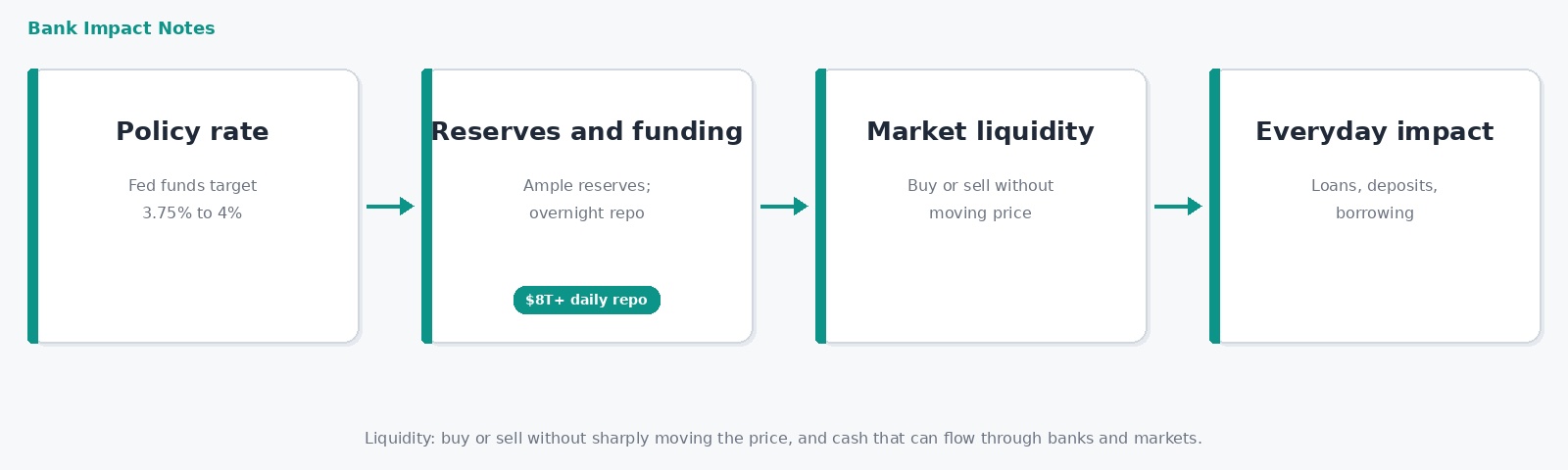
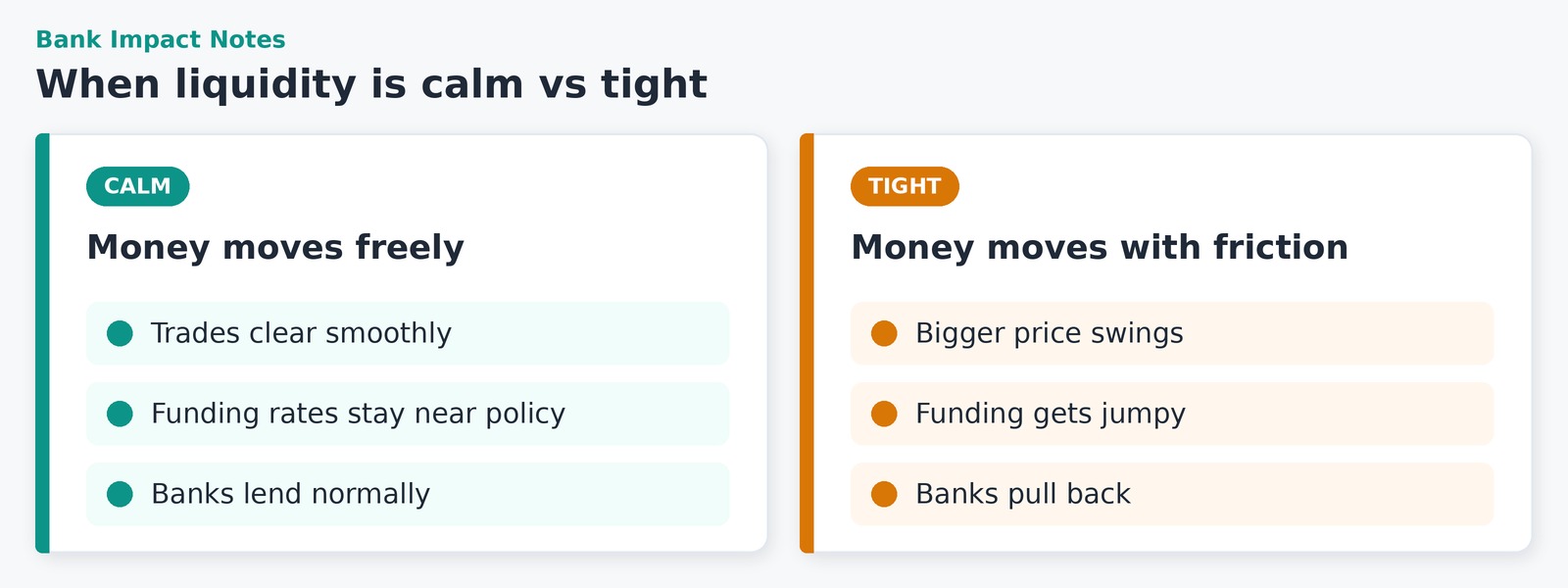
Liquidity is how easily you can buy or sell without sharply moving the price, and how easily cash flows through banks and funding markets. When it is healthy, trades clear smoothly. When it tightens, dealers and banks need more room on their balance sheets, and short term funding can get jumpy.
3.75% to 4%
Fed funds target range
$8T+
Daily overnight repo volume
The plumbing underneath
The Fed’s target range, set on September 16, 2026, is only half the story. The Fed also works to keep bank reserves “ample,” so overnight funding rates stay close to that setting. Underneath sits the overnight Treasury repo market, a key short term funding market for Treasuries and dealers, where pressure can spill into the federal funds rate, more strongly when liquidity is scarce.
Why it matters to you
This is not a trading tip. It is a map. When rates and funding both stay orderly, banks and markets work with less friction, and that usually means more predictable loans, deposits, and borrowing. For a real example, see how higher rates hit AI spending. The same rates also reach your HSA and the rising cost of care. Banks also have to police the money moving through them, and Bank of America’s $1.2 billion penalty shows what weak controls can cost.
The takeaway
Rate decisions set the price of short term money. Reserves and funding set how freely it moves.
Sources: Fed Implementation Note, Sep 2026 · Fed research on repo markets, Aug 2026 · NY Fed speech on reserves, Sep 2026


Leave a Reply